CASE STUDY
BUZZFEED CONTENT
DISTRIBUTION AT SCALE
BUZZFEED CONTENT
DISTRIBUTION AT SCALE
Product: BuzzFeed Internal Smart Publishing System
Role: Product Manager → Senior Product Manager, Publishing & Distribution
Timeline: 18 months (2018-2020)
︎ CHALLENGE
BuzzFeed's growth model depends on distributing viral content at scale—listicles, quizzes, videos—to drive traffic, watch time, and affiliate revenue. 40% of traffic comes from social platforms, making distribution velocity critical.
Then, social platforms changed their algorithms. Traffic plummeted. The publishing team was downsized. Their scope continued to grew from 3 platforms and 2 content types to 6 platforms and 3 content types. Manual workflows couldn't keep pace. Human curation missed viral windows, leaving traffic and revenue on the table.
I inherited this platform after my manager left. Two core problems: 1) Publishers juggled fragmented tools—external platforms, internal systems, spreadsheets—just to plan and publish. 2) No systematic way to surface relevant, high-performing content to re-promote at the right time.
︎ APPROACH
Rebranded from "publishing tool" to "distribution intelligence system." The core insight: automation and ML could handle high-volume, predictable publishing, freeing humans for editorial judgment on breaking news and topical content.
Set a foundation with an integrated workflow
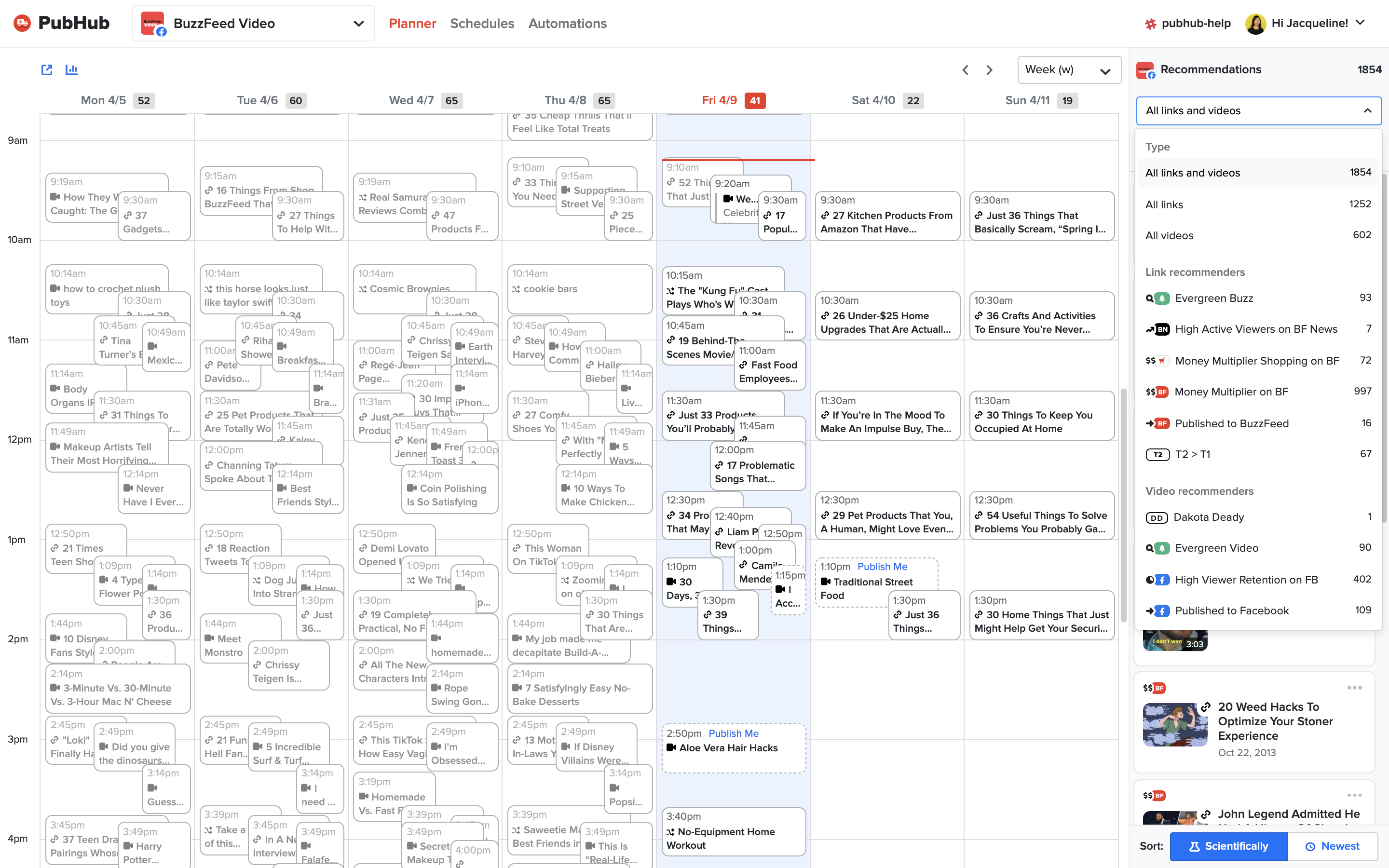
- Consolidated sourcing, planning, and publishing into a single tool
- Built a recommendation queue with drag-and-drop functionality for organizing and scheduling content in a publishing calendar.
- Surfaced content with rich context(performance scores, event triggers) to help publishers curate and evaluate effectively.
Three Strategic bets built on this foundation
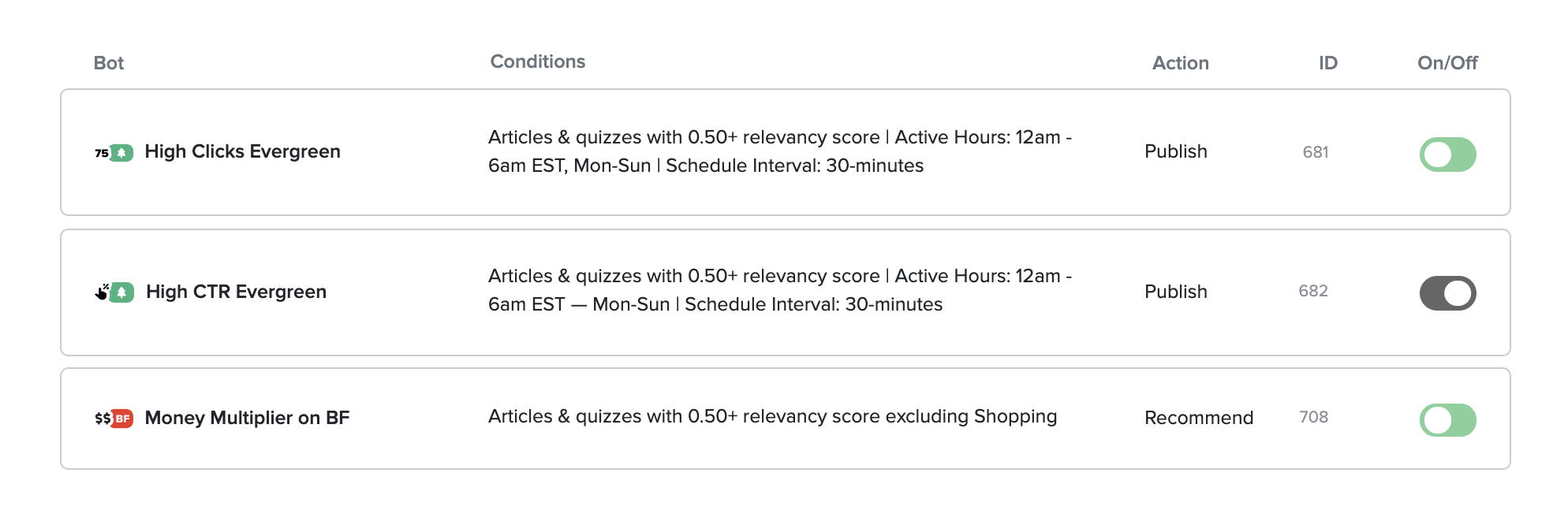
- Automation at Scale: Introduced rules-based publishing for content that easily maps to channels (e.g., food videos → all lifestyle channels). Built user controls so the editorial team maintained creative authority.
![]()
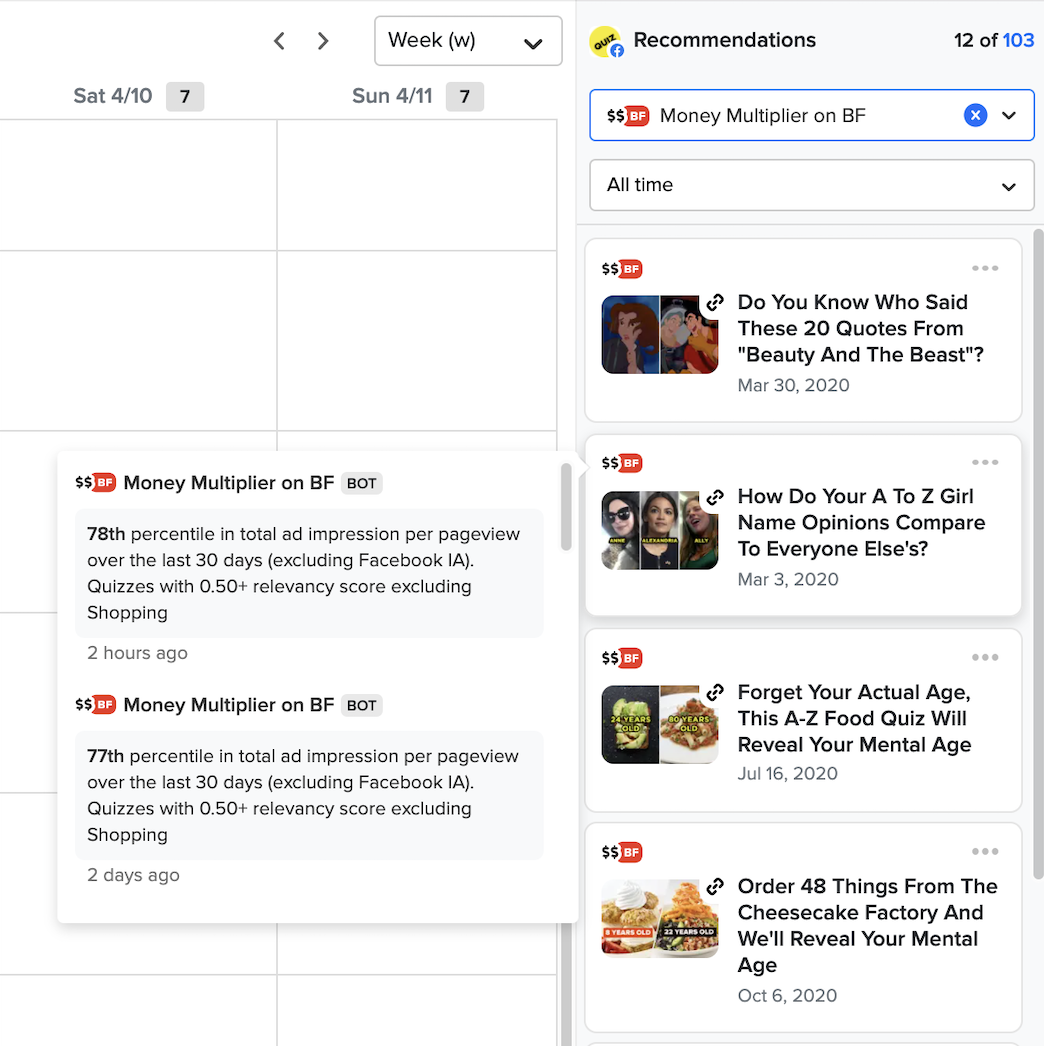
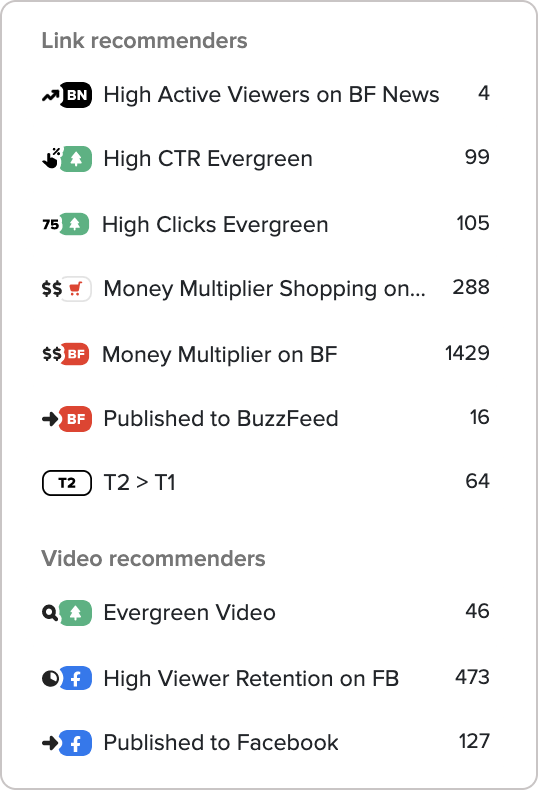
- ML-Driven Recommendations: Scaled recommendation bots from 2 to 24. Built an evergreen model to surface old but relevant content for re-promotion.
![]()
![]() .
.
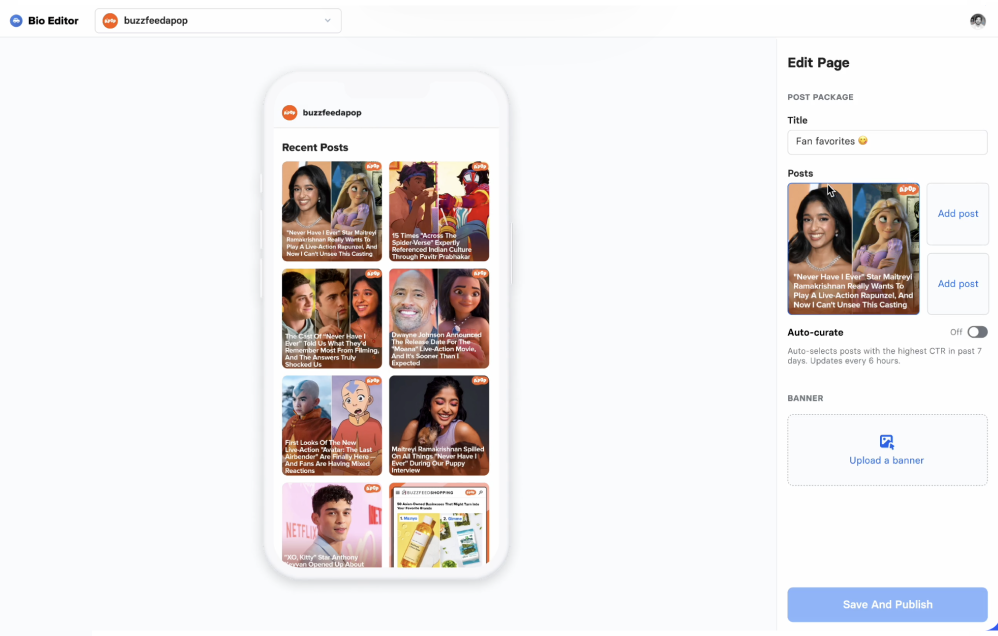
- Shopping Content Distribution: Launched link-in-bio automation and CMS for Instagram and TikTok to maximize affiliate revenue
![]()
 .
. 
Key cross-functional work
- Drove adoption and built trust with the editorial through user controls and training sessions
- Migrated pipeline architecture from pull-based to push-based to reduce recommendation latency from hours to real-time
- Balanced automation efficiency with editorial creative authority through toggles and runtime configs.
︎ IMPACT
Boost traffic and revenue
- Supported 3.2B monthly content views at peak.
- Enabled downsized publishing team to handle 4K assets/week across 6 platforms
- Automated video publishing and ML-driven distribution on Facebook and YouTube generated $25M annually in ad revenue.
- 500% YoY affiliate revenue growth via shopping content automation
- 300% YoY increase in pageviews from evergreen content
- 15% increase in Instagram traffic, 98% increase in TikTok traffic through link-in-bio automation
- Automated 65% of weekly publishing (2,600 of 4K assets) through 781 automation rules.
- Reduced workflow friction by 30% by centralizing fragmented tools
- Cut bot deployment time from 7 to 3 days, enabling mid-week strategy pivots
- Saved 90% of the publishing team's time on manual link updates through link-in-bio automation
- Smart publishing system featured in IPO deck, highlighting BuzzFeed’s tech-led strategy to investors
- Flexible architecture later enabled BuzzFeed to integrate HuffPost's CMS post-acquisition in under a month
︎ LEARNING
- Prioritize impact over completeness. Shopping content automation drove significantly more impact than filling feature parity gaps.
- Trust is the blocker for adoption. Spent time getting editorial team buy-in. Automation only works when users believe it augments their judgment, not replaces it.
- Ok to do things that don't scale early. Updated automation rules in JSON or validated model output manually to speed up learning and reduce risk.
TEAM: Max Woolf (Data Science), Alex Gervais (Design), Mireille Keuroghlian (APM), Kevin Merritt (Tech Lead), Andrea Handevidt (Engineering Manager), T Zhang (Data Engineering), Brooke Weil, Nathan O’Brien, Dominic Hanzel, Nick Gervais (Engineering).